Start with the job: connect and verify an MCP server in Claude Code
A Claude Code MCP connection is safest when its configuration scope matches its audience. Keep personal experiments local, share only reviewed project configuration and reserve user scope for servers intentionally available across projects.
Configuration location does not protect credentials by itself. Shared project files should reference environment variables or an authentication flow rather than embedding secrets, and project-scoped servers still require a trust decision.
Make the operating boundary visible
Claude Code supports local stdio and remote HTTP servers, stores configuration according to scope and exposes connection state through its MCP interface. The host can discover tools while still applying permission decisions before use.
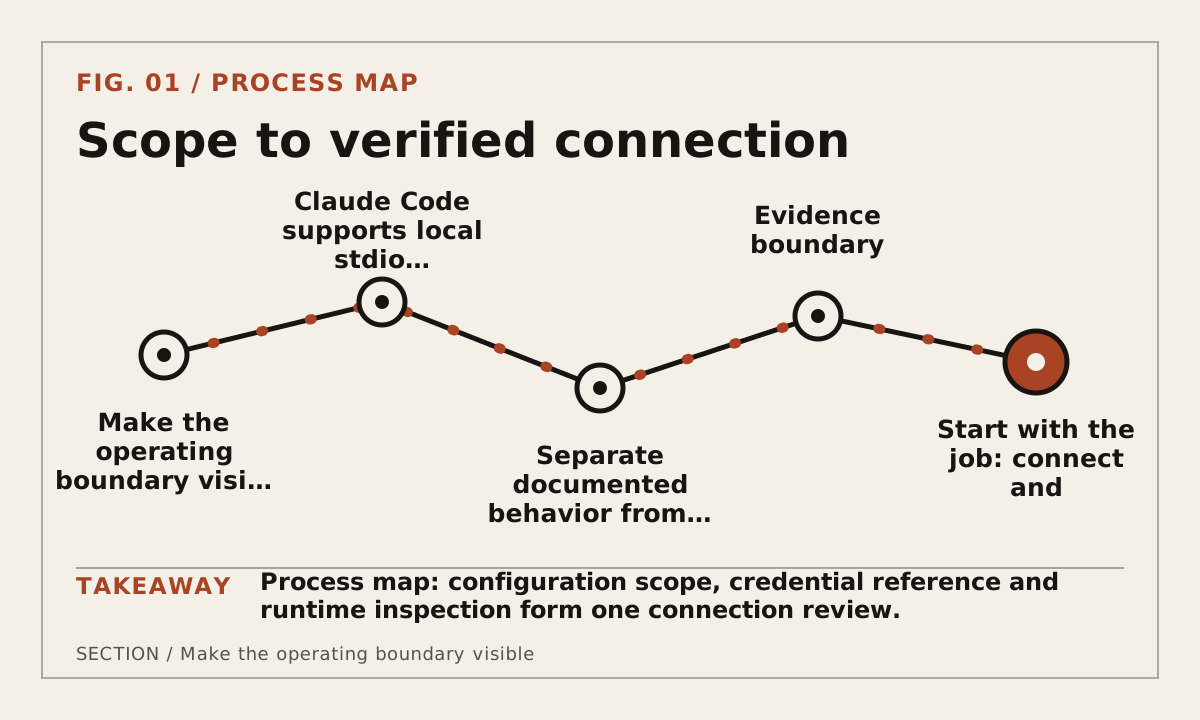
Scope to verified connection
Build a reproducible path
For Claude MCP: Connect Servers to Claude Code, use a small fixture that another developer can repeat without privileged production data. Change one boundary at a time and preserve the exact configuration needed to explain how the page's decision was reached.
- Choose local, project or user scope from who should receive the connection.
- Add the server with its documented transport and secret references.
- Inspect connection status and advertised capabilities before requesting work.
- Run one allowed call, one denied action and a remove-and-reconnect test.
Keep secrets outside the claude mcp artifact. Record variable names, scopes and owners, then verify the relevant system of record whenever this tool or workflow can change external state.
Record evidence that survives a rerun
Keep the exact server identity, scope, transport and non-secret configuration in the review. Capture the capability inventory and the host's permission decision, not just a successful natural-language answer.
- Claude Code scope and configuration owner
- Server command or remote endpoint
- Required environment variable names, never values
- Advertised tools and observed approval behavior
Date the Claude MCP: Connect Servers to Claude Code record and keep factual observations separate from inference. If a claim depends on a hosted service, preview feature or moving SDK, name that dependency beside the claim.
Use a decision rule and a stopping rule
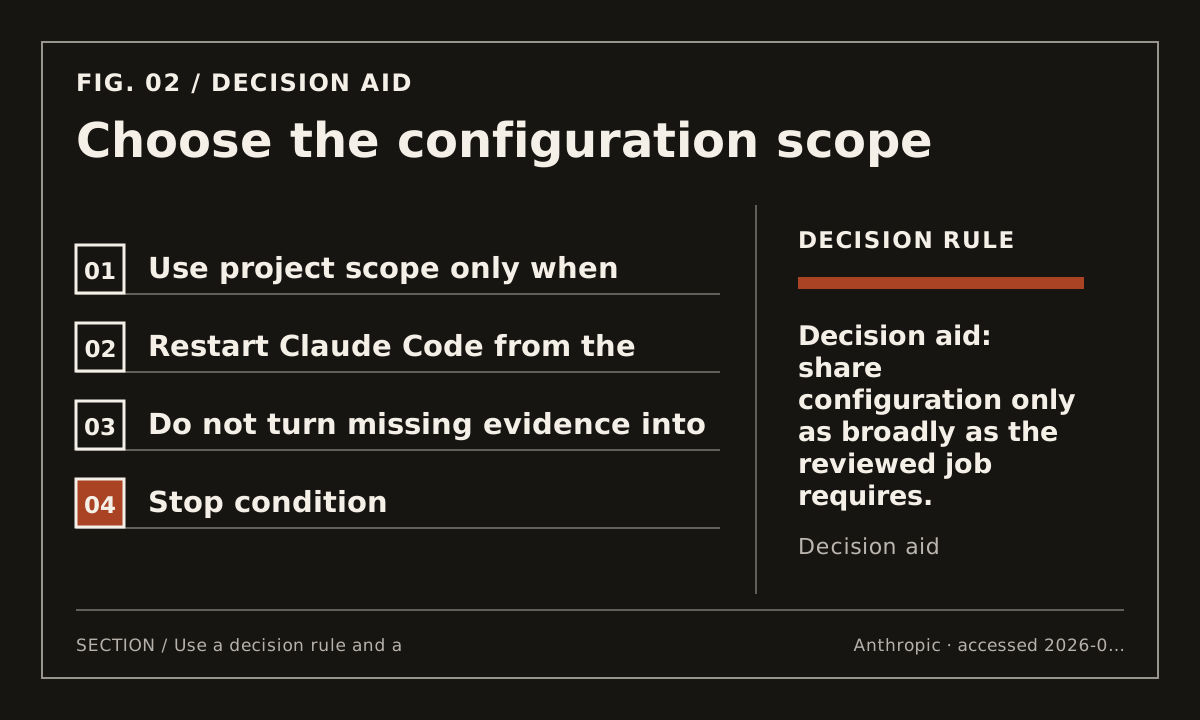
Use project scope only when teammates need the same reviewed integration and can obtain their own credentials. Prefer local scope for experimental or person-specific servers that should not become a repository dependency.
Restart Claude Code from the intended project, inspect the server state and repeat the task from a user who lacks the upstream permission. Removal should eliminate the capability without leaving an active credential elsewhere.
Choose the configuration scope
Protect against predictable failure and continue deliberately
For Claude MCP: Connect Servers to Claude Code, the architecture review flags three recurring failure modes: specification versions are mixed; local and remote trust boundaries are conflated; a server is recommended without permission review. Treat them as release checks, not footnotes. This page remains draft when its exact implementation or intent evidence is still research-gated.
Use the MCP server evaluation guide next: it shows how to screen ownership, capabilities and access before connection.
Use the Context7 MCP test next: it checks retrieved documentation against identity and version evidence.
Use the MCP field guide next: it reconnects the decision to protocol roles and versioned boundaries.