Start with the job: implement and test an MCP server with the official Python SDK
A maintainable Python MCP server keeps protocol handling, application logic and external side effects distinct. Start with one capability whose inputs can be validated and whose result can be checked without trusting model interpretation.
Decorator-heavy examples can hide process lifecycle and dependency behavior. Record the SDK release and inspect the generated capability schema rather than assuming annotations produce the contract you intended.
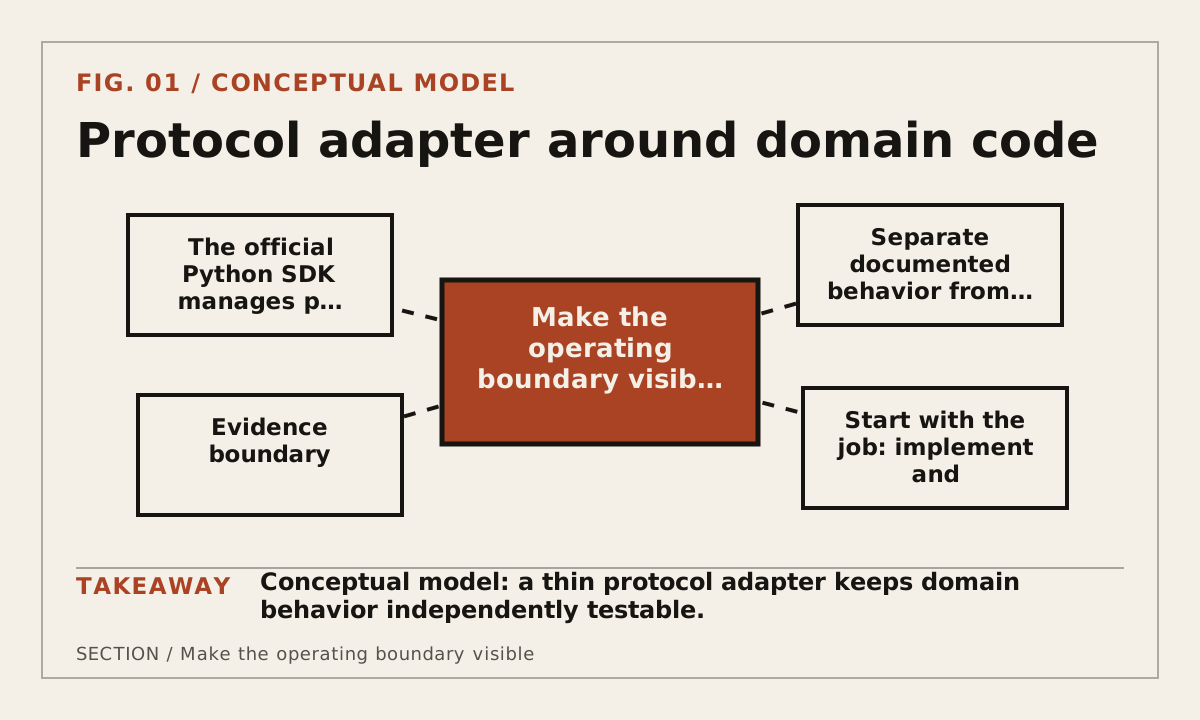
Make the operating boundary visible
The official Python SDK manages protocol messages and transport integration while a handler calls ordinary Python domain code. Keeping that domain function independent makes authorization, fixtures and failure tests easier to reason about.
Protocol adapter around domain code
Build a reproducible path
For Build an MCP Server in Python, use a small fixture that another developer can repeat without privileged production data. Change one boundary at a time and preserve the exact configuration needed to explain how the page's decision was reached.
- Pin Python and the official SDK in a reproducible environment.
- Implement one pure or read-only domain operation before the MCP wrapper.
- Validate inputs, bound outputs and map dependency failures explicitly.
- Inspect the advertised schema and repeat tests after a clean process restart.
Keep secrets outside the build mcp server python artifact. Record variable names, scopes and owners, then verify the relevant system of record whenever this tool or workflow can change external state.
Record evidence that survives a rerun
The lab record should include the dependency lock, non-secret start command, advertised capability and one accepted and rejected payload. Test results need to distinguish domain assertions from protocol behavior.
- Python and SDK versions
- Primitive schema and handler boundary
- External client, timeout and credential scope
- Domain, protocol and lifecycle checks
Date the Build an MCP Server in Python record and keep factual observations separate from inference. If a claim depends on a hosted service, preview feature or moving SDK, name that dependency beside the claim.
Use a decision rule and a stopping rule
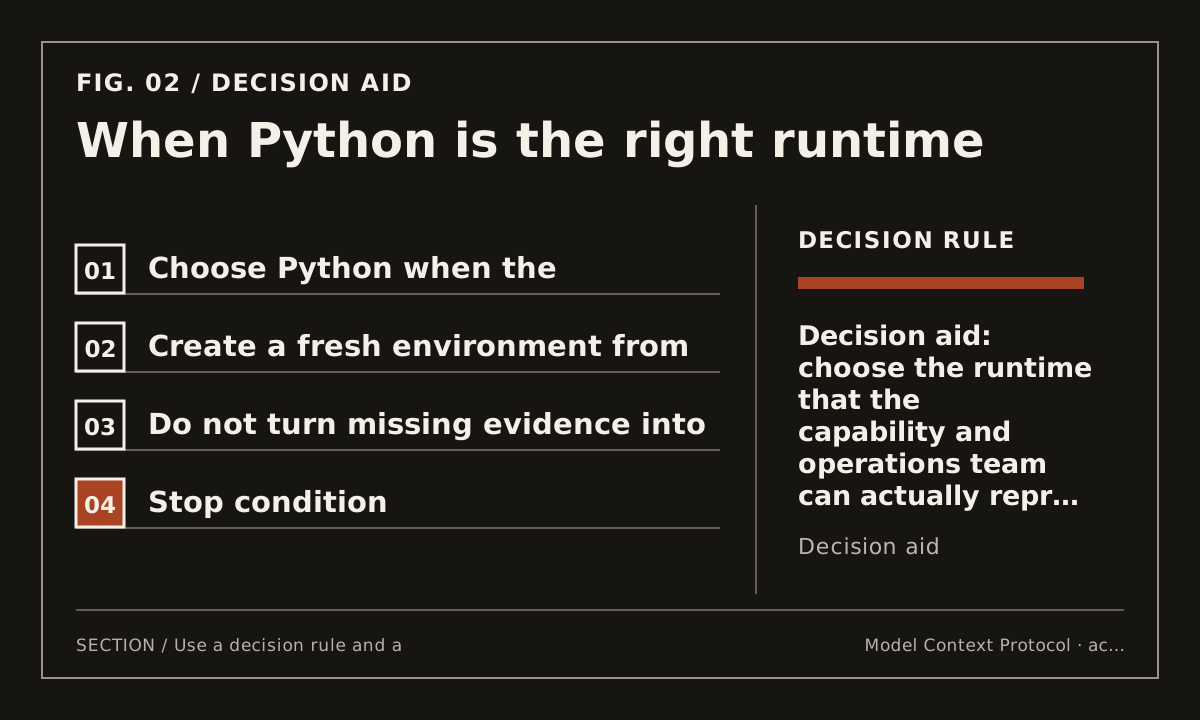
Choose Python when the capability already lives near Python services or data tooling and the operational team can own that runtime. Language familiarity does not remove the need for process supervision and version pinning.
Create a fresh environment from the lock, inspect the server, send malformed and oversized inputs and simulate an unavailable dependency. The server should fail visibly without returning stack traces or secret-bearing details.
When Python is the right runtime
Protect against predictable failure and continue deliberately
For Build an MCP Server in Python, the architecture review flags three recurring failure modes: specification versions are mixed; local and remote trust boundaries are conflated; a server is recommended without permission review. Treat them as release checks, not footnotes. This page remains draft when its exact implementation or intent evidence is still research-gated.
Use the MCP server build path next: it turns one capability into a versioned, inspectable implementation.
Use the MCP Inspector workflow next: it isolates capability and payload failures with a known client.
Use the MCP field guide next: it reconnects the decision to protocol roles and versioned boundaries.