Start with the job: debug capabilities, payloads, and failures with MCP Inspector
MCP Inspector is a protocol workbench: it helps a developer connect to a server, inspect advertised capabilities and exercise calls with controlled inputs. It does not replace authorization review, adversarial testing or downstream state verification.
A valid schema and successful response show that the inspected path works. They do not prove the server exposes no extra data, protects tokens correctly or remains safe when an agent supplies untrusted content.
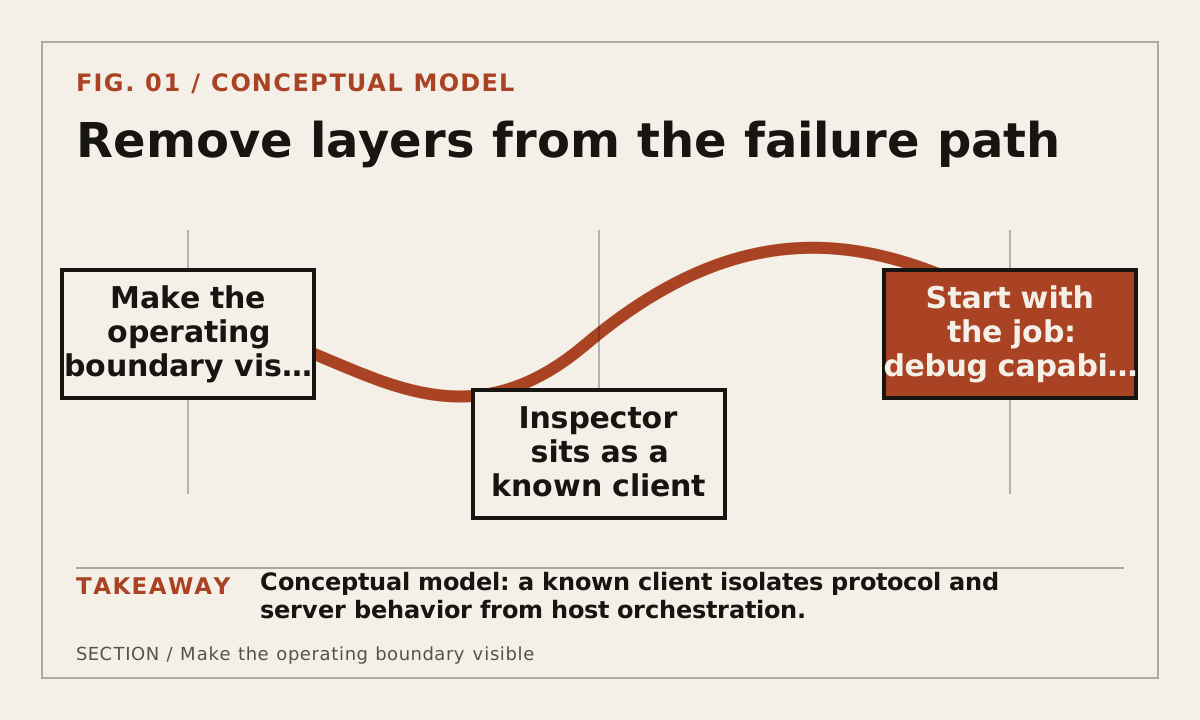
Make the operating boundary visible
Inspector sits as a known client beside the server under test. That removes the host application's prompting and orchestration from the path, making initialization, capability listing, payload validation and server errors easier to isolate.
Remove layers from the failure path
Build a reproducible path
For Test an MCP Server With MCP Inspector, use a small fixture that another developer can repeat without privileged production data. Change one boundary at a time and preserve the exact configuration needed to explain how the page's decision was reached.
- Pin Inspector and server versions before launching the session.
- Record initialization and enumerate every advertised primitive.
- Send one valid, boundary and malformed payload per capability.
- Compare responses and side effects with server logs and the system of record.
Keep secrets outside the mcp inspector artifact. Record variable names, scopes and owners, then verify the relevant system of record whenever this tool or workflow can change external state.
Record evidence that survives a rerun
Export or transcribe sanitized payloads and errors, but keep credentials and private tool output out of screenshots. The strongest record links each observation to a server release and expected result.
- Inspector and server versions
- Transport command or endpoint without secrets
- Capability list and schemas
- Valid, denied and malformed call outcomes
Date the Test an MCP Server With MCP Inspector record and keep factual observations separate from inference. If a claim depends on a hosted service, preview feature or moving SDK, name that dependency beside the claim.
Use a decision rule and a stopping rule
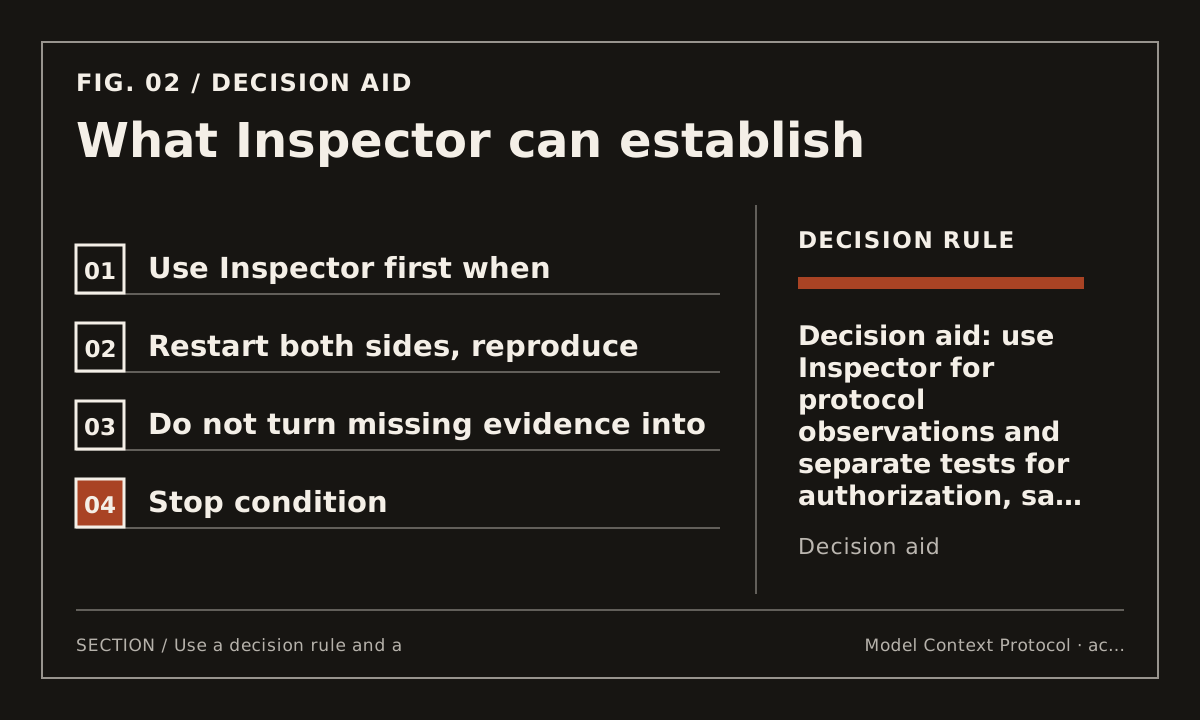
Use Inspector first when failures could come from transport, initialization or schema handling. Return to the host application only after the same server behaves predictably through this simpler client path.
Restart both sides, reproduce the failure and change only one layer at a time. For a write tool, inspect the downstream system; an apparently successful JSON result is not independent evidence.
What Inspector can establish
Protect against predictable failure and continue deliberately
For Test an MCP Server With MCP Inspector, the architecture review flags three recurring failure modes: specification versions are mixed; local and remote trust boundaries are conflated; a server is recommended without permission review. Treat them as release checks, not footnotes. This page remains draft when its exact implementation or intent evidence is still research-gated.
Use the MCP server build path next: it turns one capability into a versioned, inspectable implementation.
Use the TypeScript MCP implementation next: it uses the official SDK around one typed capability.
Use the MCP field guide next: it reconnects the decision to protocol roles and versioned boundaries.