Start with the job: shortlist open-source frameworks using explicit requirements
Open source gives access to code and licensing terms; it does not guarantee maintainability, security or low operating cost. Start with non-negotiable architecture and deployment requirements, then verify candidate projects at source level.
Stars, download counts and broad feature tables are discovery signals, not selection evidence. A project may be active yet incompatible with your state model, provider boundary or support expectations.
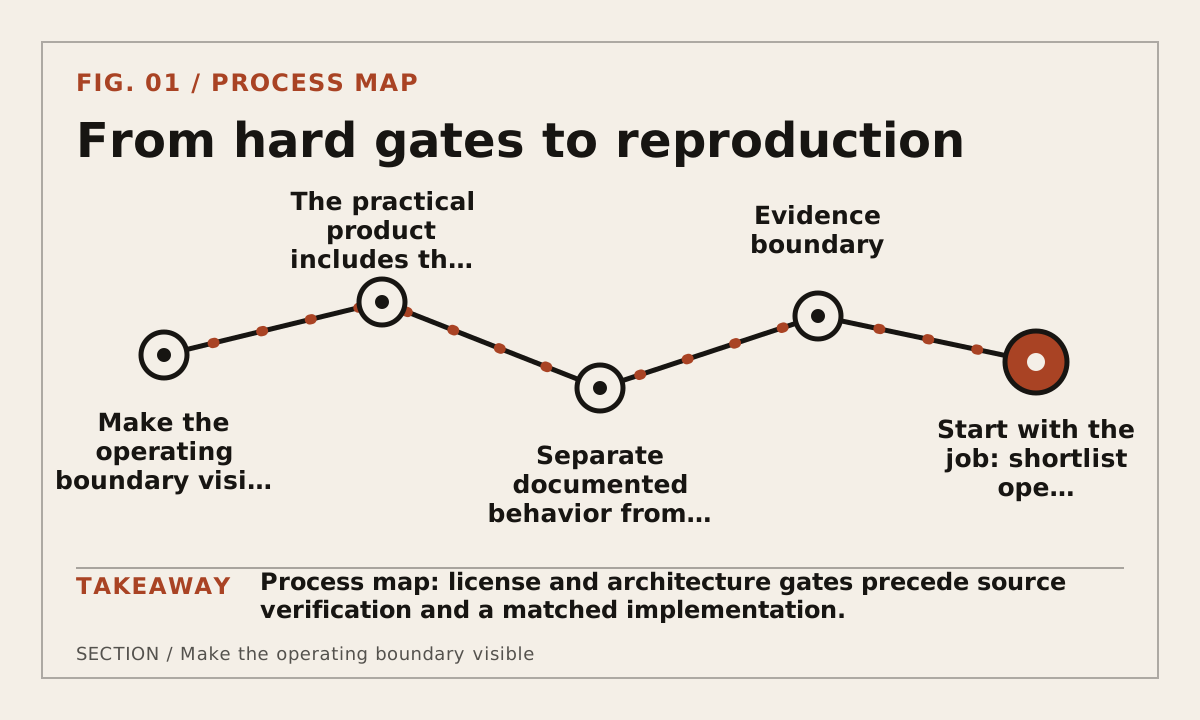
Make the operating boundary visible
The practical product includes the repository, release process, dependencies, extension points and the infrastructure you must run. Governance and upgrade behavior determine how safely the team can adopt fixes or carry a fork.
From hard gates to reproduction
Build a reproducible path
For Open-Source AI Agent Frameworks, use a small fixture that another developer can repeat without privileged production data. Change one boundary at a time and preserve the exact configuration needed to explain how the page's decision was reached.
- Write hard gates for language, license, state, tools and deployment.
- Verify each surviving capability in official docs and source.
- Reproduce a matched fixture from a pinned release.
- Inspect maintenance, security reporting, migration notes and exit cost.
Keep secrets outside the best open source ai agent frameworks artifact. Record variable names, scopes and owners, then verify the relevant system of record whenever this tool or workflow can change external state.
Record evidence that survives a rerun
Record repository ownership, license, release date, supported runtimes and the exact commit or package used. Behavioral claims come from the fixture; community popularity should not substitute for them.
- License and governance owner
- Release cadence and security process
- Runtime, storage and provider dependencies
- Reproduction result and fork or migration cost
Date the Open-Source AI Agent Frameworks record and keep factual observations separate from inference. If a claim depends on a hosted service, preview feature or moving SDK, name that dependency beside the claim.
Use a decision rule and a stopping rule
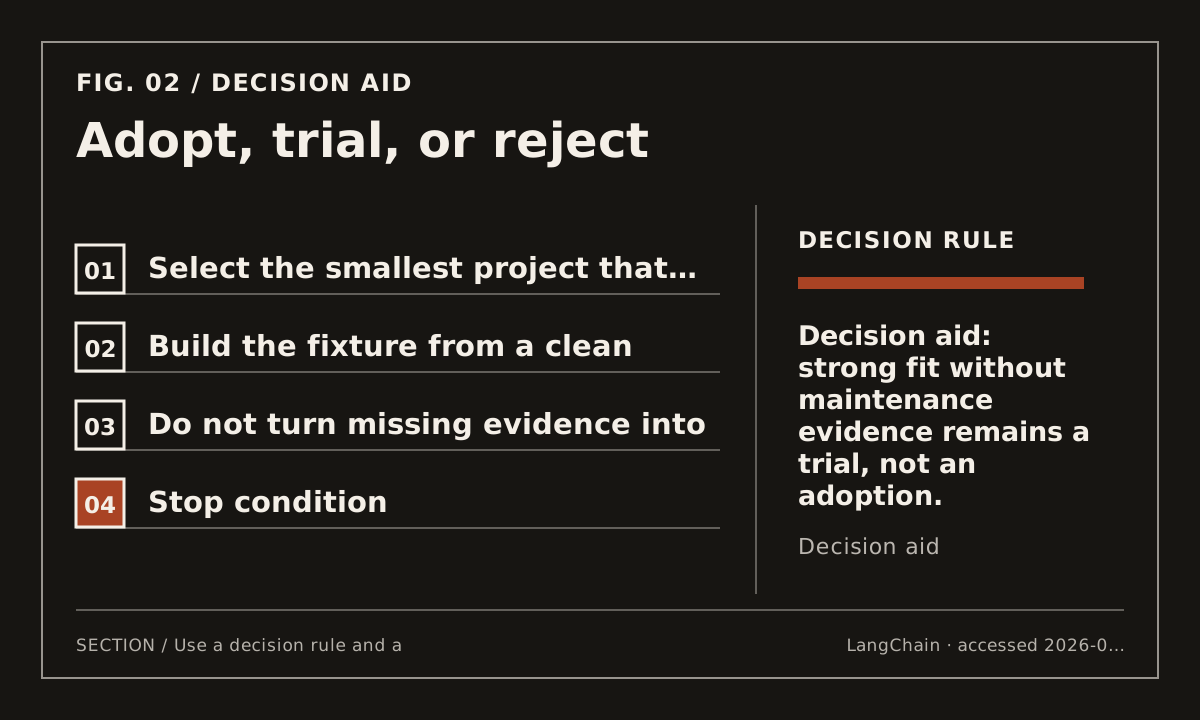
Select the smallest project that passes hard gates and has an upgrade path the team can own. A mature library with fewer abstractions can be safer than a broader framework with unstable boundaries.
Build the fixture from a clean lockfile, update one minor version in isolation and inspect migration impact. Confirm that traces and state can leave any optional hosted service.
Adopt, trial, or reject
Protect against predictable failure and continue deliberately
For Open-Source AI Agent Frameworks, the architecture review flags three recurring failure modes: the page becomes a vendor listicle; frameworks are compared on different tasks; deployment and observability costs are ignored. Treat them as release checks, not footnotes. This page remains draft when its exact implementation or intent evidence is still research-gated.
Use the agent platform guide next: it examines managed state, identity, deployment and data boundaries.
Use the framework decision matrix next: it turns requirements and confidence into an auditable score.
Use the AI agent framework field guide next: it starts selection from a fixed production job and hard requirements.