Start with the job: place approval and intervention points in an agent workflow
Human-in-the-loop design is a control boundary, not a confirmation modal after the work is already done. Pause before a consequential tool executes, preserve enough state for review and make approve, edit and reject outcomes explicit.
Reviewing every step creates fatigue and teaches operators to approve mechanically. Reviewing only the final prose is too late when earlier tools have changed systems or disclosed data.
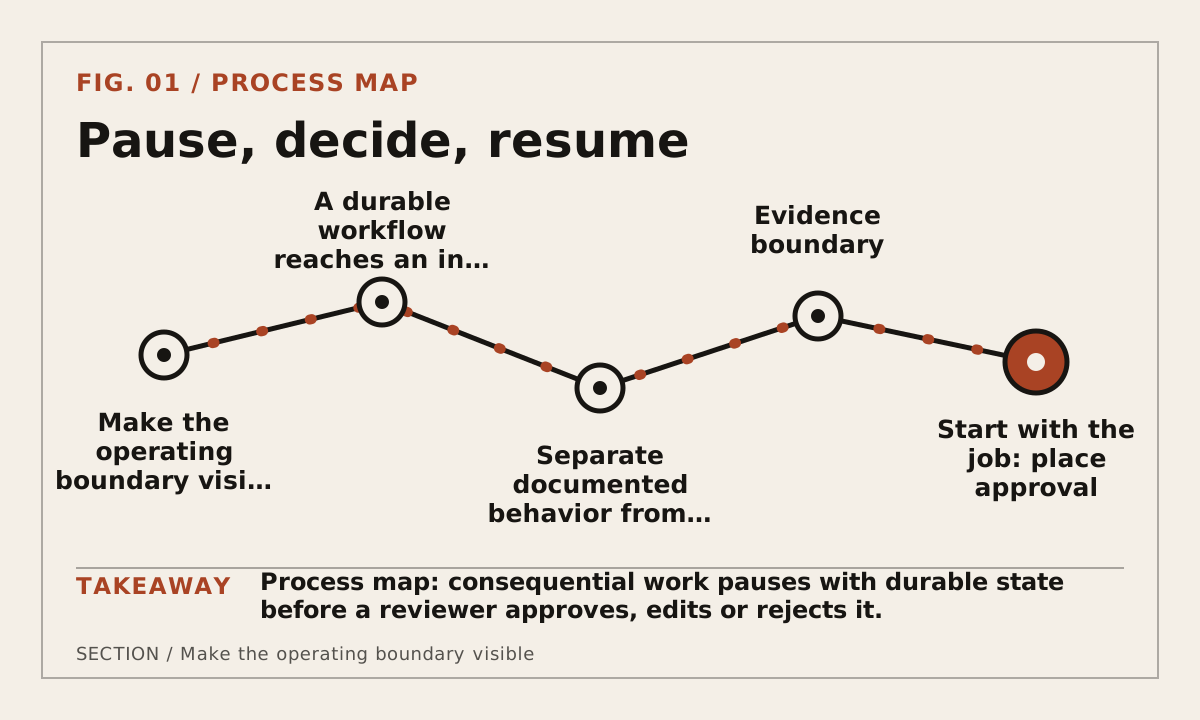
Make the operating boundary visible
A durable workflow reaches an interrupt, checkpoints state and presents the proposed action with relevant context. A reviewer approves it, edits parameters or rejects it with feedback; execution then resumes from the recorded decision.
Pause, decide, resume
Build a reproducible path
For Human-in-the-Loop Agent Patterns, use a small fixture that another developer can repeat without privileged production data. Change one boundary at a time and preserve the exact configuration needed to explain how the page's decision was reached.
- Classify actions by reversibility, external effect and data sensitivity.
- Place interrupts before high-impact execution, not after the response.
- Show the exact parameters, target and evidence a reviewer needs.
- Define timeout, escalation, edit and rejection paths and test resumption.
Keep secrets outside the human in the loop agent pattern artifact. Record variable names, scopes and owners, then verify the relevant system of record whenever this tool or workflow can change external state.
Record evidence that survives a rerun
Audit records should connect proposed action, reviewer identity, decision, edits and downstream result. A generic 'human approved' flag is insufficient when the parameters changed during review.
- Triggering action and risk reason
- Checkpointed state and proposed parameters
- Reviewer identity, decision and edits
- Resume path, timeout and downstream outcome
Date the Human-in-the-Loop Agent Patterns record and keep factual observations separate from inference. If a claim depends on a hosted service, preview feature or moving SDK, name that dependency beside the claim.
Use a decision rule and a stopping rule
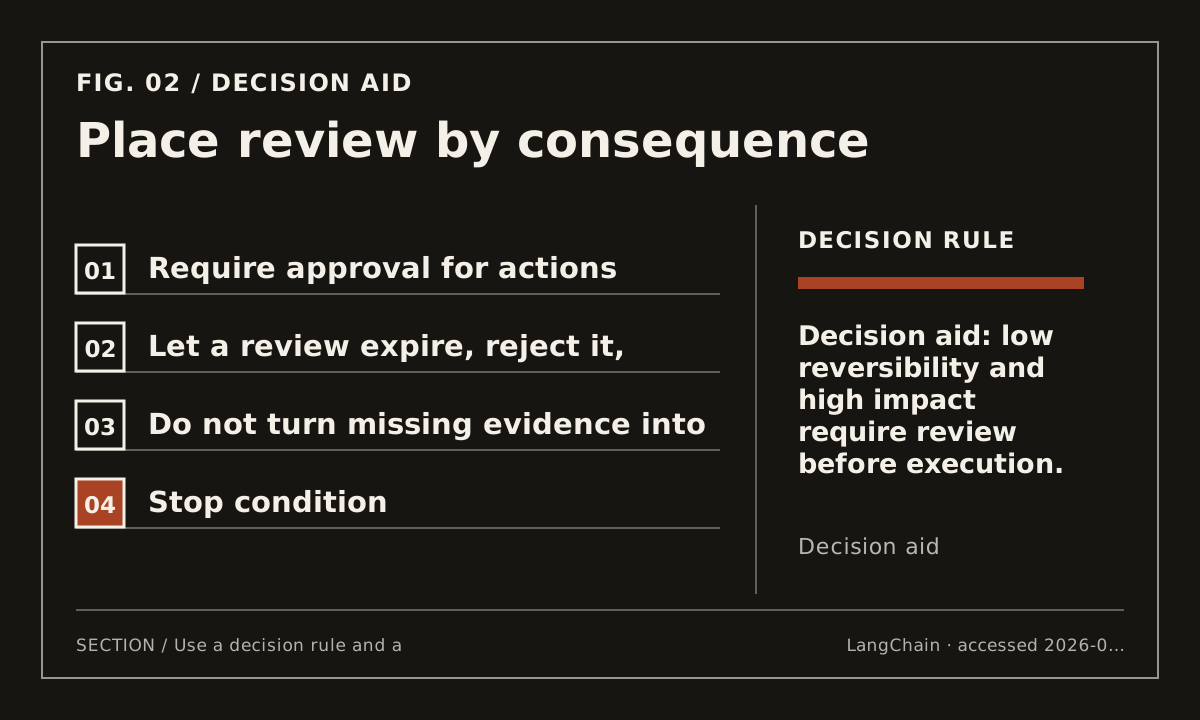
Require approval for actions with high consequence, uncertain targets or weak reversibility. Use sampling or post-run review for lower-risk actions only when containment and rollback make that choice defensible.
Let a review expire, reject it, edit one parameter and resume after a process restart. The workflow must not execute stale or original parameters after the reviewer changes them.
Place review by consequence
Protect against predictable failure and continue deliberately
For Human-in-the-Loop Agent Patterns, the architecture review flags three recurring failure modes: the page becomes a vendor listicle; frameworks are compared on different tasks; deployment and observability costs are ignored. Treat them as release checks, not footnotes. This page remains draft when its exact implementation or intent evidence is still research-gated.
Use the agent pattern map next: it chooses control flow before framework-specific abstractions.
Use the multi-agent pattern guide next: it tests whether coordination earns its state and handoff costs.
Use the AI agent framework field guide next: it starts selection from a fixed production job and hard requirements.