Start with the job: build a traced agent with the OpenAI Agents SDK
The OpenAI Agents SDK provides agents, tools, handoffs, guardrails, runners and built-in tracing. A useful implementation begins with one agent and one bounded tool, then adds delegation only when the trace shows a real separation need.
Tracing improves observability but can capture model and tool inputs or outputs. Review sensitive-data settings and retention before using production payloads; a detailed trace is also a data asset.
Make the operating boundary visible
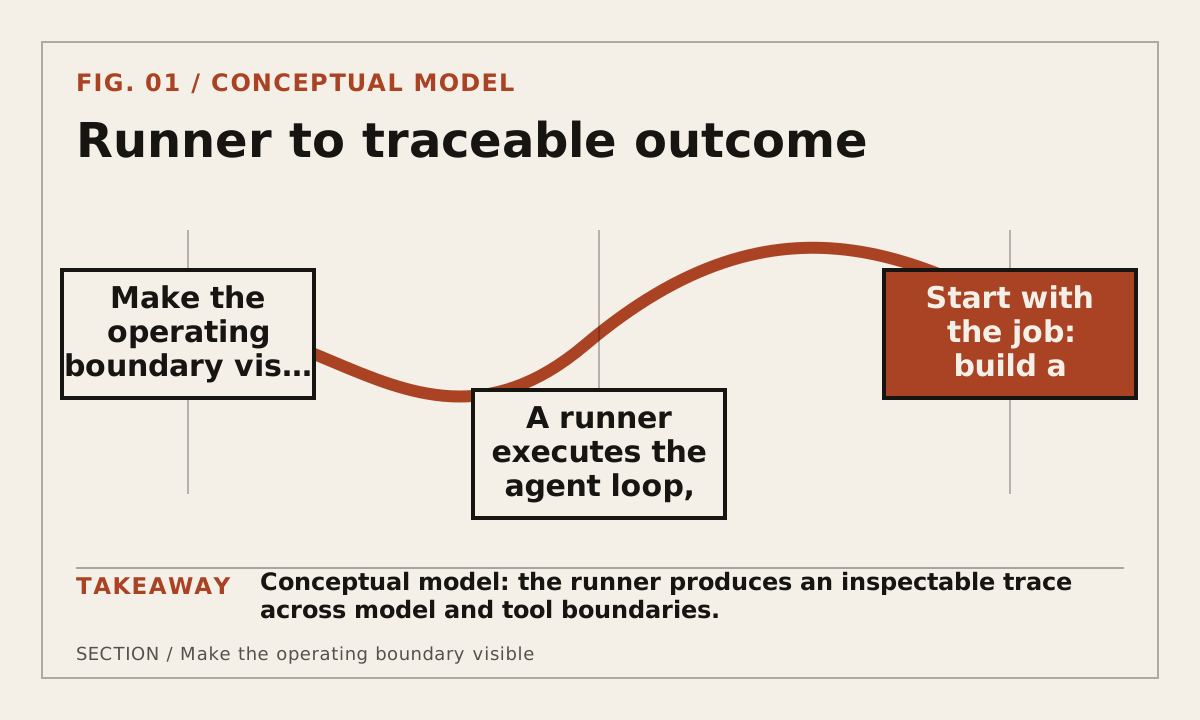
A runner executes the agent loop, function tools expose application capabilities, handoffs transfer control and traces group model generations, tool calls, guardrails and custom events into an execution record.
Runner to traceable outcome
Build a reproducible path
For OpenAI Agents SDK: Build, Trace, and Evaluate, use a small fixture that another developer can repeat without privileged production data. Change one boundary at a time and preserve the exact configuration needed to explain how the page's decision was reached.
- Pin the SDK and define one agent with a narrow output and stop rule.
- Wrap one domain function as a tool with validated parameters.
- Name the workflow and configure trace data handling deliberately.
- Test a successful call, tool error, guardrail path and unnecessary handoff.
Keep secrets outside the openai agents sdk artifact. Record variable names, scopes and owners, then verify the relevant system of record whenever this tool or workflow can change external state.
Record evidence that survives a rerun
Keep the package lock, agent and tool definitions, trace configuration and a sanitized trace identifier. Evaluate the downstream result independently; trace completion is not proof that the external action was correct.
- SDK, model and provider configuration
- Agent instructions and tool schemas
- Handoff, guardrail and runner settings
- Trace export, sensitive-data and downstream-result checks
Date the OpenAI Agents SDK: Build, Trace, and Evaluate record and keep factual observations separate from inference. If a claim depends on a hosted service, preview feature or moving SDK, name that dependency beside the claim.
Use a decision rule and a stopping rule
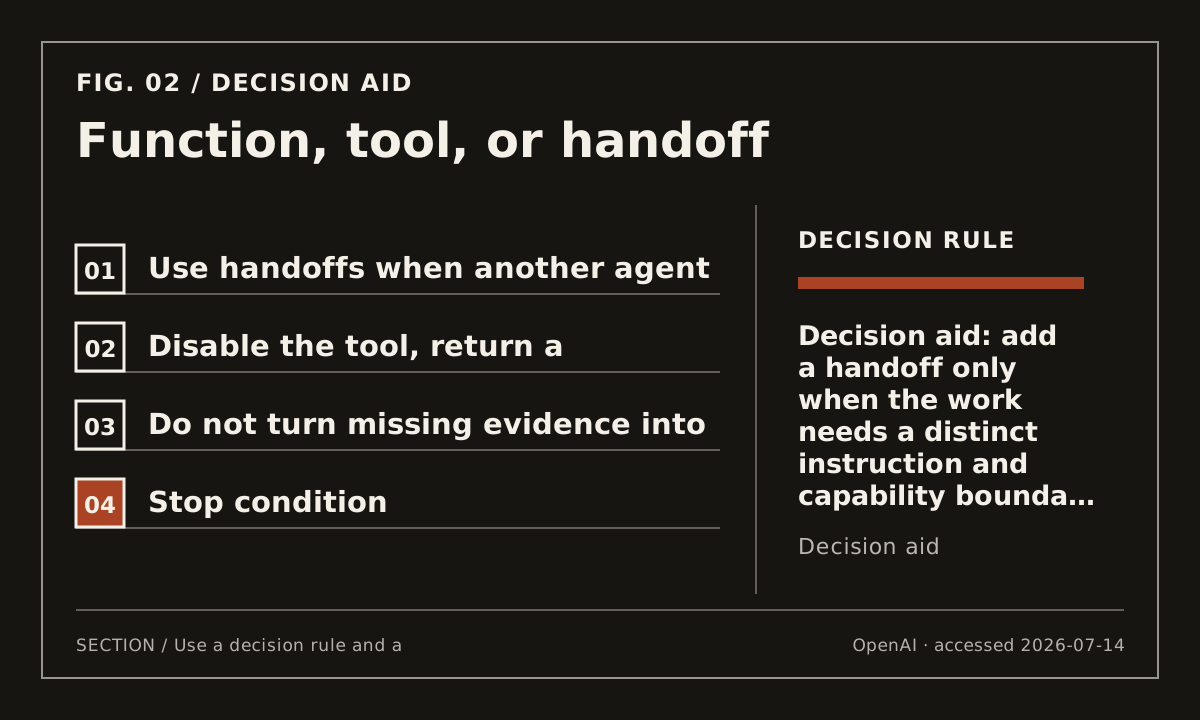
Use handoffs when another agent needs a distinct instruction and tool boundary, not as a substitute for a function. Keep one agent when the same context and acceptance criteria govern the whole task.
Disable the tool, return a structured error and inspect the resulting spans. Repeat with sensitive-data capture disabled and confirm the trace remains useful without exposing payloads.
Function, tool, or handoff
Protect against predictable failure and continue deliberately
For OpenAI Agents SDK: Build, Trace, and Evaluate, the architecture review flags three recurring failure modes: the page becomes a vendor listicle; frameworks are compared on different tasks; deployment and observability costs are ignored. Treat them as release checks, not footnotes. This page remains draft when its exact implementation or intent evidence is still research-gated.
Use the framework implementation series next: it holds one fixture constant across different runtimes.
Use the LangGraph lab note next: it implements explicit state, checkpoints and interruption.
Use the AI agent framework field guide next: it starts selection from a fixed production job and hard requirements.