Start with the job: build and inspect a stateful LangGraph agent
LangGraph fits work that benefits from explicit state transitions and durable execution. Model the workflow as a small graph whose state and stop conditions are inspectable before adding broad tools or multi-agent roles.
A graph does not make an agent reliable by itself. Nodes can still contain opaque prompts or unsafe tools, and persistence can retain sensitive state unless the application sets appropriate storage boundaries.
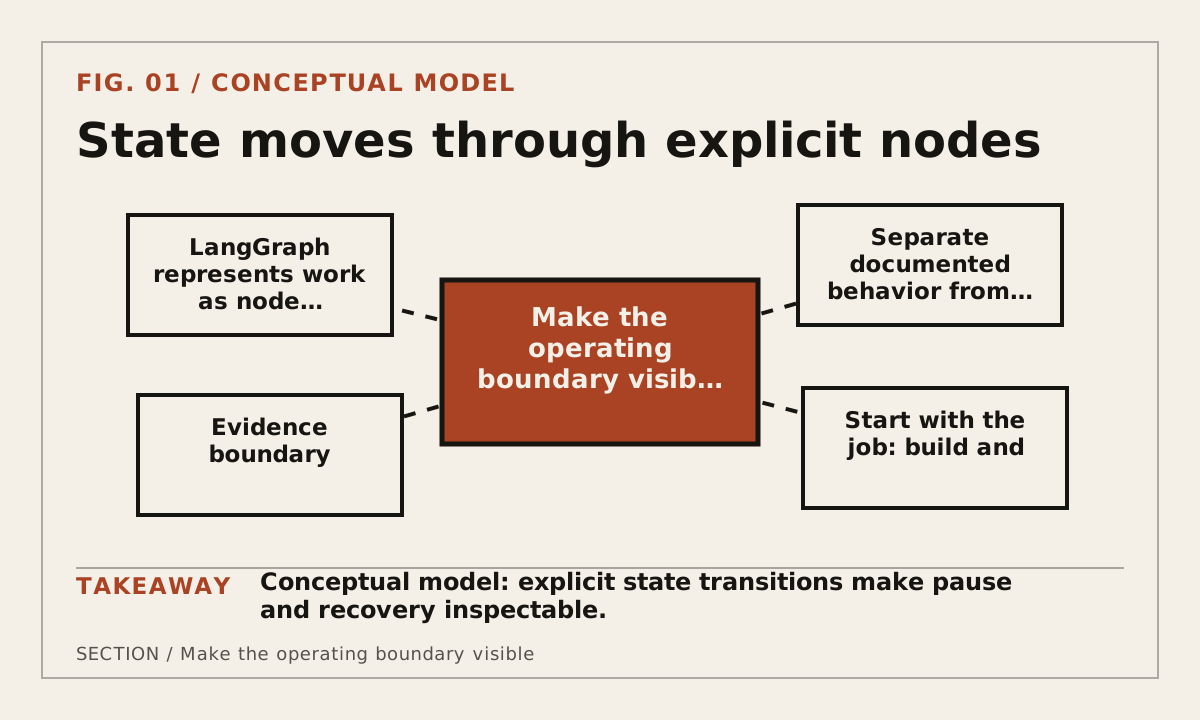
Make the operating boundary visible
LangGraph represents work as nodes operating on shared state with edges controlling transitions. Compilation produces an executable graph; checkpointing and interrupts support pause, inspection and resumption when configured.
State moves through explicit nodes
Build a reproducible path
For LangGraph: Build a Stateful Agent Under Test, use a small fixture that another developer can repeat without privileged production data. Change one boundary at a time and preserve the exact configuration needed to explain how the page's decision was reached.
- Define a minimal typed state containing only required fields.
- Add deterministic nodes around one model or tool decision.
- Compile with a suitable checkpointer and stable thread identity.
- Test normal completion, interruption, resume and a failed node.
Keep secrets outside the langgraph agent tutorial artifact. Record variable names, scopes and owners, then verify the relevant system of record whenever this tool or workflow can change external state.
Record evidence that survives a rerun
Record package versions, graph definition, state schema and sanitized state transitions. If LangSmith or another hosted service is used, document that dependency and trace-data handling separately.
- LangGraph and dependency versions
- State schema, nodes and transition rules
- Checkpoint storage and thread identity
- Interrupt, resume and failure traces
Date the LangGraph: Build a Stateful Agent Under Test record and keep factual observations separate from inference. If a claim depends on a hosted service, preview feature or moving SDK, name that dependency beside the claim.
Use a decision rule and a stopping rule
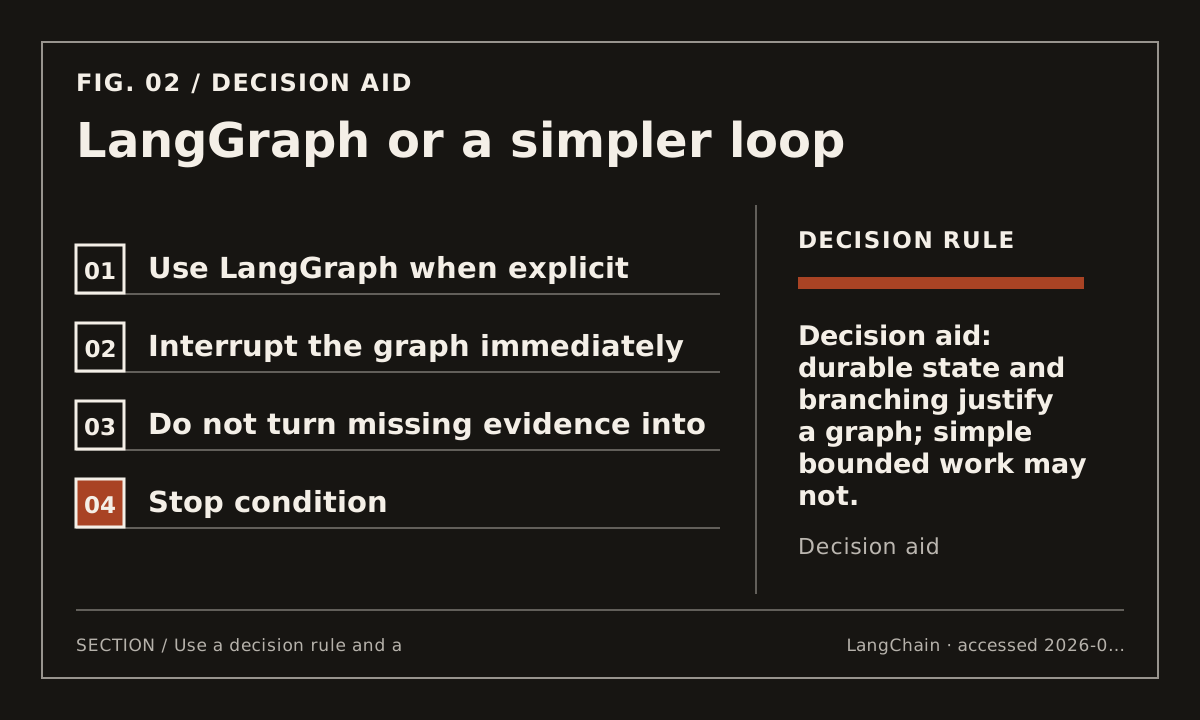
Use LangGraph when explicit orchestration and resumable state are hard requirements. A simpler function or higher-level agent abstraction is preferable when the graph adds no meaningful control or recovery value.
Interrupt the graph immediately before a side effect, restart the process and resume from the checkpoint. Confirm the action executes once and the persisted state contains no unnecessary secrets.
LangGraph or a simpler loop
Protect against predictable failure and continue deliberately
For LangGraph: Build a Stateful Agent Under Test, the architecture review flags three recurring failure modes: the page becomes a vendor listicle; frameworks are compared on different tasks; deployment and observability costs are ignored. Treat them as release checks, not footnotes. This page remains draft when its exact implementation or intent evidence is still research-gated.
Use the framework implementation series next: it holds one fixture constant across different runtimes.
Use the Microsoft Agent Framework walkthrough next: it records preview status, sessions, workflows and hosting assumptions.
Use the AI agent framework field guide next: it starts selection from a fixed production job and hard requirements.