Start with the job: choose an MCP transport for local or remote deployment
Stdio fits a host launching and supervising a local server process; Streamable HTTP fits a server operated across a network boundary. The transport choice changes lifecycle, identity and failure handling, not the primitive semantics.
Local does not mean harmless, and remote does not automatically mean enterprise-ready. A stdio child may reach local files and environment data, while HTTP requires network authentication, service operation and careful session handling.
Keep this page's decision boundary canonical
For stdio, the host normally owns process creation and inherits a large part of the local trust decision. Review the executable path, package or image provenance, working directory, environment variables and operating-system permissions. Standard output is reserved for protocol messages, so diagnostic logs need another channel. Startup time, crashed child processes and orphan cleanup are user-experience concerns as well as operations concerns because the host may otherwise present tools that cannot answer.
For Streamable HTTP, establish server identity and authorization before comparing convenience. Document the canonical endpoint, TLS termination, protected-resource identity, token audience, session behavior, concurrency and timeout policy. A retry after a broken connection can duplicate a non-idempotent action, while an intermediary can impose limits the protocol implementation does not expect. Test requests through the actual network path, including authentication expiry and service restart, rather than assuming behavior from a local development server.
The final choice can be asymmetric across capabilities. A local filesystem adapter may belong in stdio because the data and process are intentionally on one machine, while a shared ticketing integration belongs behind an operated HTTP service with organizational identity. Do not force one transport across the entire tool estate for configuration uniformity. Standardize the review fields and telemetry instead, so each deployment boundary is explicit and comparable.
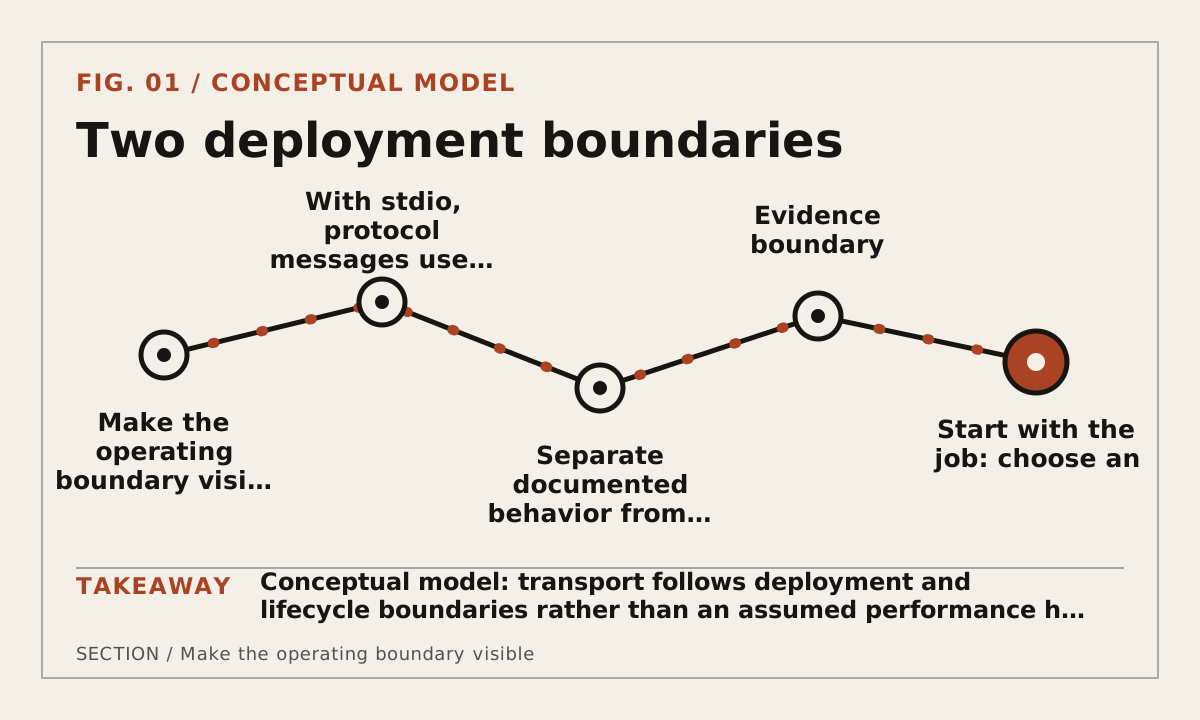
Make the operating boundary visible
With stdio, protocol messages use a process's standard input and output while logs must remain separate. Streamable HTTP carries MCP messages over HTTP and supports remote deployment under the versioned transport requirements.
Two deployment boundaries
Build a reproducible path
For MCP stdio vs Streamable HTTP, use a small fixture that another developer can repeat without privileged production data. Change one boundary at a time and preserve the exact configuration needed to explain how the page's decision was reached.
- Locate the capability and the data it must reach.
- Name who starts, updates, monitors and stops the server.
- Define identity and credential handling for the chosen boundary.
- Test reconnect, partial failure, shutdown and protocol-version handling.
Keep secrets outside the mcp stdio vs streamable http artifact. Record variable names, scopes and owners, then verify the relevant system of record whenever this tool or workflow can change external state.
Record evidence that survives a rerun
Compare transports on the same capability and consequence model. Record process privileges for stdio or endpoint identity and authorization for HTTP, plus observed startup and failure behavior.
- Deployment and data locality
- Process or service lifecycle owner
- Authentication and credential storage
- Reconnect, timeout, shutdown and logging behavior
Date the MCP stdio vs Streamable HTTP record and keep factual observations separate from inference. If a claim depends on a hosted service, preview feature or moving SDK, name that dependency beside the claim.
Use a decision rule and a stopping rule
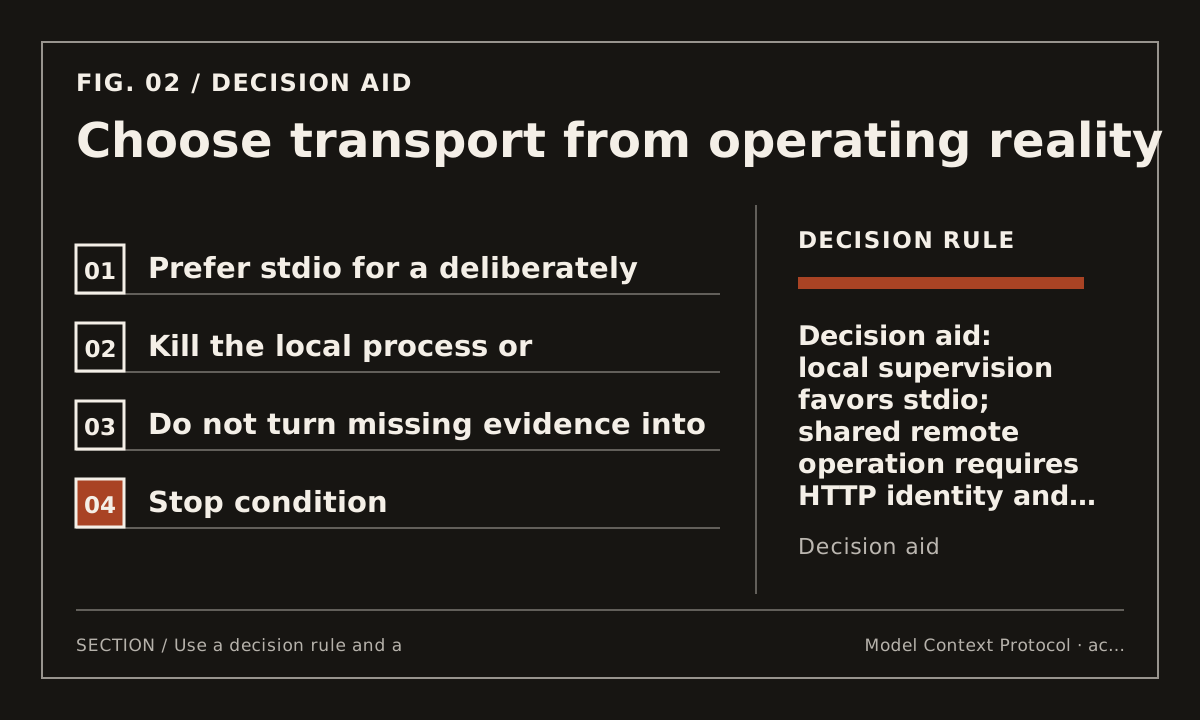
Prefer stdio for a deliberately local, host-supervised capability with acceptable machine access. Prefer Streamable HTTP when multiple clients need an independently operated service and the team can own network identity, authorization and availability.
Kill the local process or interrupt the remote connection during a controlled call, then observe client recovery and duplicate-action risk. Confirm that logs never share stdout with stdio protocol messages.
Choose transport from operating reality
Protect against predictable failure and continue deliberately
For MCP stdio vs Streamable HTTP, the architecture review flags three recurring failure modes: specification versions are mixed; local and remote trust boundaries are conflated; a server is recommended without permission review. Treat them as release checks, not footnotes. This page remains draft when its exact implementation or intent evidence is still research-gated.
Use the MCP architecture map next: it separates host policy, client state, server behavior and transport.
Use the client versus host explainer next: it assigns policy and protocol state to the correct layer.
Use the MCP field guide next: it reconnects the decision to protocol roles and versioned boundaries.